Postavke privatnosti

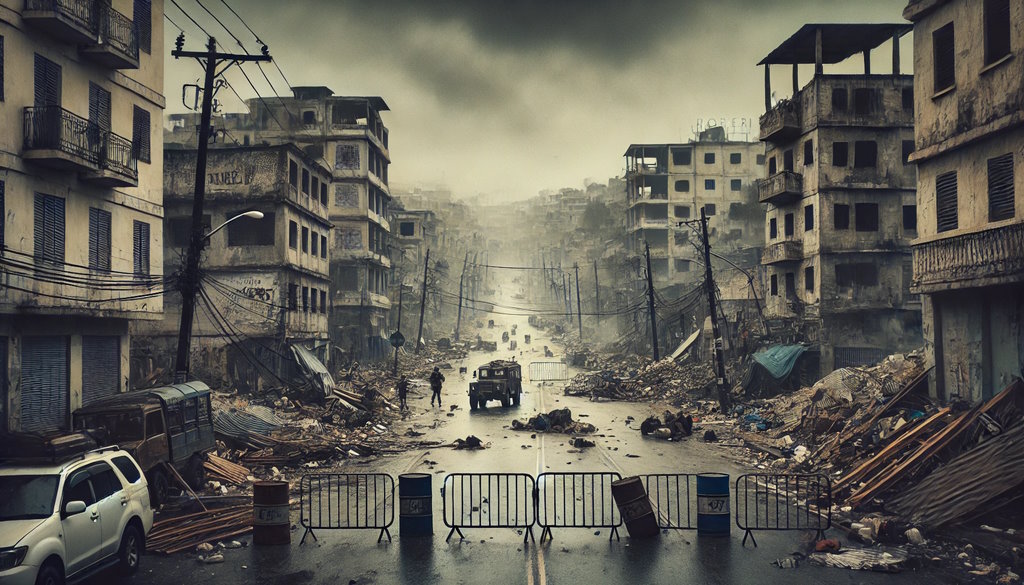
Instability and humanitarian crisis in Haiti amid armed gang clashes and growing international support

Instability in Haiti is further growing due to continued conflict and increasingly frequent attacks by armed gangs. The country is facing a serious humanitarian crisis, while the UN and the international community are intensifying efforts to stabilize the situation and help the local population.

Instability and humanitarian crisis in Haiti amid armed gang clashes and growing international support
Photo by: Domagoj Skledar/ arhiva (vlastita)

Recovery of security in Haiti under attack from violence


Haiti is once again facing an extremely unstable situation that has escalated into violence and ongoing attacks by armed gangs, while the international community is trying to find solutions to this severe crisis. Years of political instability, the death of former President Jovenel Moïse, and devastating waves of natural disasters have weakened government structures, allowing armed gangs to take control of large parts of the country, including the capital, Port-au-Prince.


Recent attack on UN helicopter


In the latest attack on aid structures, a UN helicopter carrying humanitarian workers was forced to make an emergency landing after being attacked with firearms. The helicopter, crucial for delivering food and medical supplies to thousands of people in areas isolated due to gangs, was forced to land near Port-au-Prince. The attack on international organizations represents yet another threat to humanitarian aid, which is already limited due to dangers on the ground. The situation has provoked a sharp reaction from the United Nations, which has warned of the increasingly present risk that armed groups will further jeopardize the security of the country and hinder aid to those in greatest need.


Increase in violence and humanitarian crisis


The situation has further deteriorated with mass attacks in more remote areas. One of the most severe attacks occurred in early October in a town about 97 kilometers north of the capital, where at least 70 people were killed, including children, while dozens of houses were burned down. At the same time, it is estimated that more than 10,000 people were forced to leave their homes just in the last week, bringing the total number of internally displaced persons in the country to over 700,000. Almost half of Haiti's population lives in conditions of acute food insecurity, with the risk of hunger at every turn.


International mission and security challenges


Kenya, as a key participant in the multinational security mission under the UN's auspices, has recently increased the presence of its police forces in Haiti, with plans to further increase the number of personnel by mid-November. The international mission aimed at supporting the Haitian National Police (PNH) is currently facing significant challenges, as gangs are extremely well-armed, and the illegal arms trade from the United States further exacerbates the situation. Although an initial contingent of 400 police officers was deployed to stabilize the situation, the need for security forces is expected to grow, with a final goal of reaching 2,500 officers.


The role of arms and incitement to violence


The lack of adequate border controls and the flow of illegal arms have only increased the number of civilian casualties. The US has recently expressed concern over the illegal transportation of arms to Haiti, which enables gangs to dominate the weak state system. American lawmakers have called for more active measures to control the flow of arms, emphasizing that ongoing insecurity is one of the main causes of the humanitarian disaster currently affecting the country. In addition, the rise in conflict has put additional pressure on the local population already living in conditions of chronic hunger and insecurity.


Plans for the future and uncertainty


As the international community continues to provide support to Haiti, experts warn that current efforts may not be enough to achieve long-term stability. Without the stabilization of essential state structures and the implementation of reforms, it is hard to imagine a sustainable solution. Although the UN and its partners have initiated support measures, the question remains whether the international community's efforts will be sufficient to counter the growing influence of criminal gangs that already control large parts of Haiti. Conflicts, forced migrations, and food insecurity further complicate the lives of Haiti's citizens as the country enters perhaps its most critical phase since the beginning of the crisis.

Find accommodation nearby

Creation time: 31 October, 2024

Political desk

The political desk shapes its content with the belief that responsible writing and a solid understanding of social processes hold essential value in the public sphere. For years, we have been analyzing political events, monitoring changes that affect citizens, and reflecting on the relationships between institutions, individuals, and the international community. Our approach is based on experience gained through long-term work in journalism and direct observation of political scenes in different countries and systems.

In our editorial work, we emphasize context, because we know that politics is never just the news of the day. Behind every move, statement, or decision are circumstances that define its true significance, and our task is to bring readers closer to the background and intentions that are not visible at first glance. In our articles, we strive to build a vivid picture of society – its tensions, ambitions, problems, and those moments when opportunities for change arise.

Over the years, we have learned that political reporting is not reduced to retelling conferences and press releases. It requires patience, observation, and a willingness to compare various sources, assess credibility, recognize patterns of behavior, and find meaning in actions that sometimes seem contradictory. To achieve this, we rely on experience gained through long-term work with public institutions, civil society organizations, analysts, and individuals who shape political reality through their activities.

Our writing stems from personal fieldwork: from conventions, protests, parliamentary sessions, international forums, and conversations with people who experience politics from within. These encounters shape texts in which we strive to be clear, precise, and fair, without dramatizing and without deviating from facts. We want the reader to feel informed, not overwhelmed, and to receive a picture that enables them to independently assess what a given decision means for their everyday life.

The political desk believes in the importance of open and responsible journalism. In a world full of quick reactions and sensationalism, we choose diligent, long-term work on texts that offer a broader perspective. It is a slower path, but the only one that ensures content that is thorough, credible, and in the service of the reader. Our approach has grown from decades of experience and the conviction that an informed citizen is the strongest guardian of democratic processes.

That is why our publications do not merely follow the daily news cycle. They seek to understand what political events truly mean, where they lead, and how they fit into the broader picture of international relations. We write with respect for the reader and with the awareness that politics is not an isolated field, but a space where economy, culture, identity, security, and the individual life of each person intersect.

NOTE FOR OUR READERS
Karlobag.eu provides news, analyses and information on global events and topics of interest to readers worldwide. All published information is for informational purposes only.
We emphasize that we are not experts in scientific, medical, financial or legal fields. Therefore, before making any decisions based on the information from our portal, we recommend that you consult with qualified experts.
Karlobag.eu may contain links to external third-party sites, including affiliate links and sponsored content. If you purchase a product or service through these links, we may earn a commission. We have no control over the content or policies of these sites and assume no responsibility for their accuracy, availability or any transactions conducted through them.
If we publish information about events or ticket sales, please note that we do not sell tickets either directly or via intermediaries. Our portal solely informs readers about events and purchasing opportunities through external sales platforms. We connect readers with partners offering ticket sales services, but do not guarantee their availability, prices or purchase conditions. All ticket information is obtained from third parties and may be subject to change without prior notice. We recommend that you thoroughly check the sales conditions with the selected partner before any purchase, as the Karlobag.eu portal does not assume responsibility for transactions or ticket sale conditions.
All information on our portal is subject to change without prior notice. By using this portal, you agree to read the content at your own risk.