Postavke privatnosti

The last universal common ancestor: LUCA research reveals early life on Earth 4.2 billion years ago

New research reveals details of the last universal common ancestor (LUCA) that lived 4.2 billion years ago, providing insight into early life on Earth. Scientists analyzed genes and evolutionary models to understand LUCA's biology and ecosystem.

The last universal common ancestor: LUCA research reveals early life on Earth 4.2 billion years ago
Photo by: Domagoj Skledar/ arhiva (vlastita)

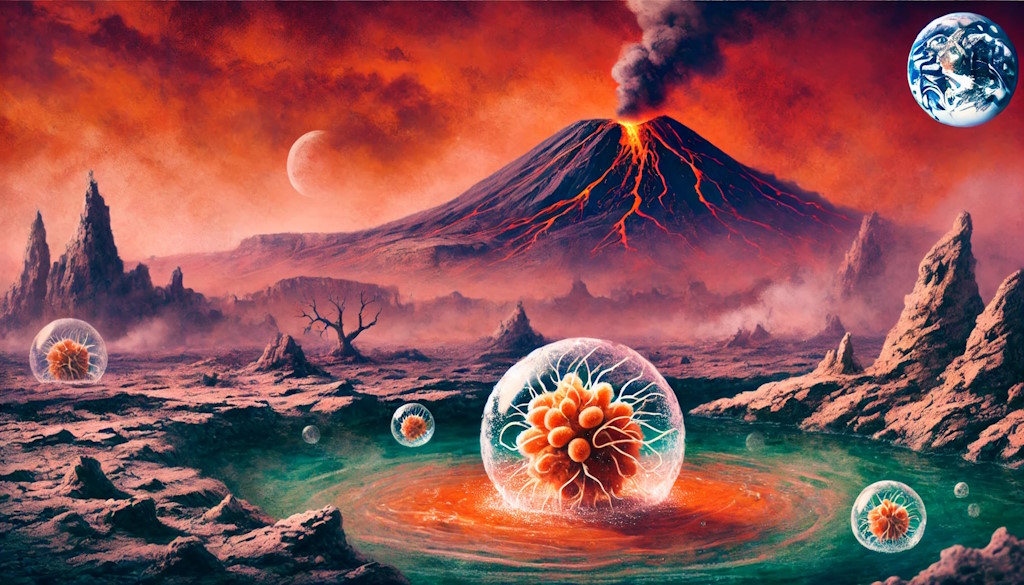
Everything that exists today originates from a common ancestor known as LUCA (Last Universal Common Ancestor).

LUCA is a hypothetical common ancestor from which all modern organisms, from single-celled organisms like bacteria to giant redwoods (and humans), descend. LUCA represents the root of the tree of life before it diverged into the groups we know today: Bacteria, Archaea, and Eukaryotes. Modern life evolved from LUCA from various sources: the same amino acids used to build proteins in all cellular organisms, a common energy currency (ATP), the presence of cellular machinery like ribosomes and others associated with producing proteins from information stored in DNA, and even the fact that all cellular life uses DNA as a way of storing information.

The team compared all the genes in the genomes of living species, counting the mutations that occurred in their sequences over time since they shared an ancestor in LUCA.

The divergence time of some species is known from fossil records, so the team used a genetic equivalent of the well-known equation used to calculate speed in physics to determine when LUCA existed, arriving at an answer of 4.2 billion years ago, roughly four hundred million years after the formation of Earth and our solar system.

Co-author Dr. Sandra Álvarez-Carretero from the School of Earth Sciences in Bristol said: “We didn’t expect LUCA to be so old, within just a few hundred million years of Earth’s formation. However, our results fit with modern views on the possibility of life on early Earth.”

The team then worked out the biology of LUCA by modeling the physiological characteristics of living species through the genealogy of life back to LUCA. Lead author Dr. Edmund Moody explained: “The evolutionary history of genes is complex due to their exchange between lineages. We need to use complex evolutionary models to reconcile the evolutionary history of genes with the genealogy of species.”

Co-author Dr. Tom Williams from the School of Biological Sciences in Bristol said: “One of the real strengths here is applying the reconciliation approach of the gene tree and species tree to such a diverse dataset representing the primary domains of life Archaea and Bacteria. This allows us to estimate with some certainty and assess that certainty about how LUCA lived.”

Co-author Professor Davide Pisani said: “Our study showed that LUCA was a complex organism, not too different from modern prokaryotes, but what is really interesting is that it clearly possessed an early immune system, showing that even 4.2 billion years ago, our ancestor was battling viruses.”

Co-author Tim Lenton (University of Exeter, Geography School) said, “It’s clear that LUCA used and changed its environment, but it is unlikely that it lived alone. Its waste would have been food for other microbes, like methanogens, which would help create a recycling ecosystem.”

“The results and methods used in this work will also inform future studies that will explore the later evolution of prokaryotes in more detail in light of Earth’s history, including the less-studied Archaea with their methanogenic representatives,” added co-author Professor Anja Spang (Royal Netherlands Institute for Sea Research).

Co-author Professor Philip Donoghue said: “Our work combines data and methods from multiple disciplines, revealing insights into early Earth and life that could not be achieved by any single discipline alone. It also shows how quickly the ecosystem was established on early Earth. This suggests that life can thrive on Earth-like biospheres elsewhere in the universe.”

The study also involved scientists from University College London (UCL), Utrecht University, the Centre for Ecological Research in Budapest, and the Okinawa Institute of Science and Technology.

The research was funded by the John Templeton Foundation. The opinions expressed in this publication are the authors' and do not necessarily reflect the views of the John Templeton Foundation.

Source: University of Bristol

Find accommodation nearby

Creation time: 15 July, 2024

Science & tech desk

Our Science and Technology Editorial Desk was born from a long-standing passion for exploring, interpreting, and bringing complex topics closer to everyday readers. It is written by employees and volunteers who have followed the development of science and technological innovation for decades, from laboratory discoveries to solutions that change daily life. Although we write in the plural, every article is authored by a real person with extensive editorial and journalistic experience, and deep respect for facts and verifiable information.

Our editorial team bases its work on the belief that science is strongest when it is accessible to everyone. That is why we strive for clarity, precision, and readability, without oversimplifying in a way that would compromise the quality of the content. We often spend hours studying research papers, technical documents, and expert sources in order to present each topic in a way that will interest rather than burden the reader. In every article, we aim to connect scientific insights with real life, showing how ideas from research centres, universities, and technology labs shape the world around us.

Our long experience in journalism allows us to recognize what is truly important for the reader, whether it is progress in artificial intelligence, medical breakthroughs, energy solutions, space missions, or devices that enter our everyday lives before we even imagine their possibilities. Our view of technology is not purely technical; we are also interested in the human stories behind major advances – researchers who spend years completing projects, engineers who turn ideas into functional systems, and visionaries who push the boundaries of what is possible.

A strong sense of responsibility guides our work as well. We want readers to trust the information we provide, so we verify sources, compare data, and avoid rushing to publish when something is not fully clear. Trust is built more slowly than news is written, but we believe that only such journalism has lasting value.

To us, technology is more than devices, and science is more than theory. These are fields that drive progress, shape society, and create new opportunities for everyone who wants to understand how the world works today and where it is heading tomorrow. That is why we approach every topic with seriousness but also with curiosity, because curiosity opens the door to the best stories.

Our mission is to bring readers closer to a world that is changing faster than ever before, with the conviction that quality journalism can be a bridge between experts, innovators, and all those who want to understand what happens behind the headlines. In this we see our true task: to transform the complex into the understandable, the distant into the familiar, and the unknown into the inspiring.

NOTE FOR OUR READERS
Karlobag.eu provides news, analyses and information on global events and topics of interest to readers worldwide. All published information is for informational purposes only.
We emphasize that we are not experts in scientific, medical, financial or legal fields. Therefore, before making any decisions based on the information from our portal, we recommend that you consult with qualified experts.
Karlobag.eu may contain links to external third-party sites, including affiliate links and sponsored content. If you purchase a product or service through these links, we may earn a commission. We have no control over the content or policies of these sites and assume no responsibility for their accuracy, availability or any transactions conducted through them.
If we publish information about events or ticket sales, please note that we do not sell tickets either directly or via intermediaries. Our portal solely informs readers about events and purchasing opportunities through external sales platforms. We connect readers with partners offering ticket sales services, but do not guarantee their availability, prices or purchase conditions. All ticket information is obtained from third parties and may be subject to change without prior notice. We recommend that you thoroughly check the sales conditions with the selected partner before any purchase, as the Karlobag.eu portal does not assume responsibility for transactions or ticket sale conditions.
All information on our portal is subject to change without prior notice. By using this portal, you agree to read the content at your own risk.