 Karlobag.eu / AI illustration
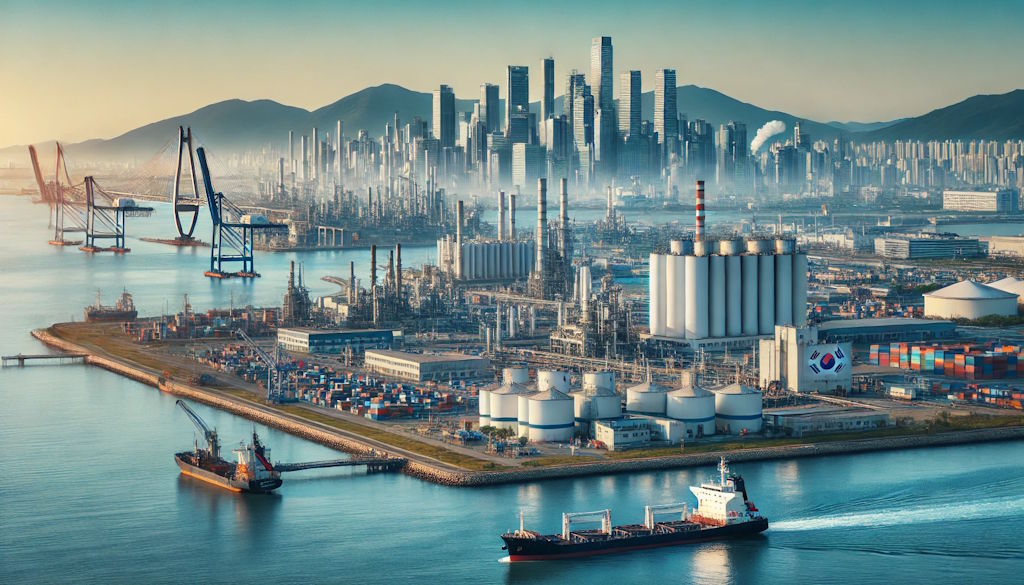
AI illustration — this image is not a real photograph and does not depict an actual event. What does AI illustration mean?
The period from 1960 to 1989 was marked by exceptional economic growth in South Korea, where real GDP per capita grew at an average annual rate of 6.82 percent. This remarkable economic rise is often attributed to industrial policies that enabled state support for certain industrial sectors. However, new research casts a different light on this story, suggesting that industrial policy may not have been as crucial as it is often thought to be.
The Role of Industrial Policy: Myth or Reality?
It was traditionally believed that industrial policy, which involves stimulating specific sectors of the economy, plays a key role in driving economic growth. However, a study by a group of economists, including experts from the prestigious MIT, reveals that the overall contribution of industrial policy to GDP growth is not as significant. The study showed that, in the best of circumstances, industrial policy can increase long-term GDP by about 1.08 percent, while under optimal conditions, this growth can reach a maximum of 4.06 percent. These figures are far from the impressive annual growth achieved by South Korea during its economic boom.
The Context of Global Demand and Domestic Constraints
One of the key reasons for the relatively modest contribution of industrial policy lies in the dynamics of global and domestic demand. While increasing production in certain sectors can lead to export growth, the demand for those products often remains limited. In other words, industrial policy can be successful in stimulating production, but without a proportional increase in demand, its impact on the overall economy remains constrained.
Real-World Examples: South Korea and Broader Implications
South Korea is often highlighted as an example of a country that achieved impressive economic growth thanks to industrial policy. However, an analysis of export data and production capacities reveals that the real reasons for success are much more complex. While sectoral interventions played a role, the key components of success were the diversification of the economy, investments in education and technological development, and a strategic openness to global markets.
Theoretical Background and Empirical Analysis
The economists' research was based on a combination of theoretical models and empirical data. Using export data from 61 countries over several decades, the researchers analyzed how changes in production capacities affect overall economic growth. The results show that higher productivity in certain sectors can increase exports, but these effects often encounter limitations due to fixed domestic and global demand.
A Broader Perspective: Alternative Goals of Industrial Policy
Although the research points to limited economic effects of industrial policy, it is important to note that its role does not have to be purely economic. Industrial policy is often used to achieve social and political goals, such as reducing inequality, protecting the environment, or strengthening the geopolitical position of a country. In some cases, industrial policy can help revitalize deindustrialized regions or create new jobs, thereby ensuring long-term stability.
Future Implications
These new findings do not negate the value of industrial policy, but call for caution and realistic expectations when applying it. The success of industrial policy depends on numerous factors, including the structure of the economy, the level of technological development, and global trends. Since the world is facing challenges such as climate change and geopolitical tensions, industrial policy could play an important role in adapting economies to these new circumstances. However, the key will be in its careful and strategic implementation.
Note: This content was prepared with the assistance of artificial intelligence tools. The content was editorially reviewed before publication.