Postavke privatnosti

New military tensions in the Taiwan Strait caused by Chinese maneuvers further destabilize the region

Due to the large-scale military maneuvers that China is conducting in the Taiwan Strait, tensions between China and Taiwan have reached a new level. The Chinese military is simulating a blockade around Taiwan with the aim of psychological pressure, which raises concerns among neighboring countries and further burdens the security situation in the region.

New military tensions in the Taiwan Strait caused by Chinese maneuvers further destabilize the region
Photo by: Domagoj Skledar/ arhiva (vlastita)

New tensions in the Taiwan Strait due to Chinese military maneuvers


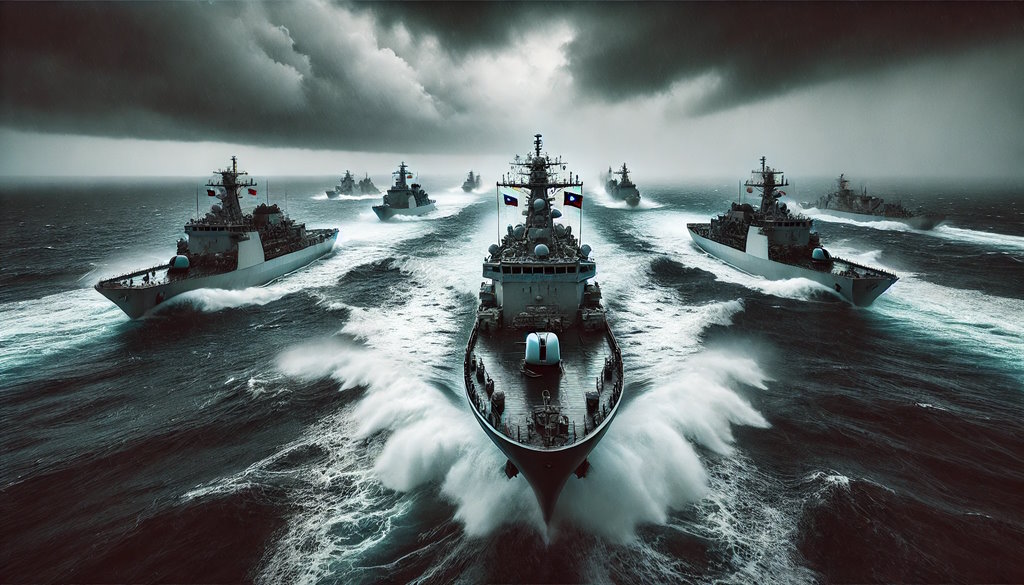
Recent military maneuvers by the Chinese military (PLA) around Taiwan have further heightened the already high tensions in the region, particularly in the Taiwan Strait. Beijing has engaged 153 military aircraft, including fighter jets and drones, and 14 warships as part of exercises dubbed “Joint Sword-2024B,” raising significant concerns among neighboring states as well as within the Taiwanese government itself. The drills simulated a blockade of Taiwan, including restrictions on air and sea access, and interference with the operational capability of the Taiwanese military, aimed at intimidation and testing the island's defensive capabilities.


Reasons and background of the latest maneuvers


The presence of Chinese military forces increased shortly after Taiwan's National Day, during which President William Lai expressed his stance on the autonomy of the island. Lai clearly stated that the People's Republic of China has no right to govern Taiwan and that the Taiwanese government would resist any attempts at annexation. In response to these statements, Beijing reacted by claiming that they were 'separatist,' which prompted an increased military presence in the strait.


Analysts estimate that such moves by China, especially in the form of increasingly frequent exercises involving maritime and aerial maneuvers in the Taiwan Strait, represent a continuation of China's strategy of pressure on Taiwan, employing a so-called gray zone of conflict. This type of activity by the Chinese military does not officially escalate into armed conflict but certainly raises the risk of possible misunderstandings, further straining the stability of the region.


Psychological effects and objectives of the Chinese strategy


The PLA uses military exercises to increase psychological pressure on Taiwanese authorities while simultaneously strengthening military presence around key Taiwanese ports and air access points. Experts believe that Beijing aims to test and adjust the operational capabilities of its military for potential future crises. The military presence includes ships from the Chinese Coast Guard, which are increasingly involved in drills with the PLA, enhancing coordination among different military branches.


By conducting large-scale maneuvers, China sends a clear message not only to Taiwan but also to the international community. At the same time, moves by the Taiwanese leadership face condemnation from Beijing, further disrupting the already sensitive balance between the two sides.


Responses and attitudes of the international community


Reactions from the international community to these events have not been delayed. The United States has expressed serious concern over Beijing's actions, emphasizing that such military maneuvers threaten to destabilize the entire region. American officials have sharply condemned the Chinese military exercises, stating that Taiwan has the right to democracy and security without the threat of military presence. Australian officials have also expressed concern, calling on China to exercise restraint and engage in dialogue.


Despite appeals for peace, analysts predict that China will continue to utilize military exercises to send messages to its audience and maintain pressure on Taiwan. Such activities are expected to continue, especially if the Taiwanese authorities persist with pro-autonomy stances, which China views as a threat to the unity and sovereignty of the People's Republic of China.


Possible scenarios in the event of escalation


Despite the increase in military activities, experts believe that an invasion is not immediately imminent. China faces internal challenges such as economic uncertainty and social pressures, which could limit its ability for open conflict. However, there are fears that any miscalculation or provocation from either side could lead to escalation, which would have serious consequences for the security of the region.


As Taiwan strengthens its own defense capabilities and deepens ties with international partners, there is a growing focus on diplomatic solutions to reduce tensions in the Taiwan Strait. The international community urges both sides to maintain peace and stability, but the military actions regularly conducted by Beijing have raised concerns that any new crisis could escalate into a more serious conflict.

Find accommodation nearby

Creation time: 29 October, 2024

Political desk

The political desk shapes its content with the belief that responsible writing and a solid understanding of social processes hold essential value in the public sphere. For years, we have been analyzing political events, monitoring changes that affect citizens, and reflecting on the relationships between institutions, individuals, and the international community. Our approach is based on experience gained through long-term work in journalism and direct observation of political scenes in different countries and systems.

In our editorial work, we emphasize context, because we know that politics is never just the news of the day. Behind every move, statement, or decision are circumstances that define its true significance, and our task is to bring readers closer to the background and intentions that are not visible at first glance. In our articles, we strive to build a vivid picture of society – its tensions, ambitions, problems, and those moments when opportunities for change arise.

Over the years, we have learned that political reporting is not reduced to retelling conferences and press releases. It requires patience, observation, and a willingness to compare various sources, assess credibility, recognize patterns of behavior, and find meaning in actions that sometimes seem contradictory. To achieve this, we rely on experience gained through long-term work with public institutions, civil society organizations, analysts, and individuals who shape political reality through their activities.

Our writing stems from personal fieldwork: from conventions, protests, parliamentary sessions, international forums, and conversations with people who experience politics from within. These encounters shape texts in which we strive to be clear, precise, and fair, without dramatizing and without deviating from facts. We want the reader to feel informed, not overwhelmed, and to receive a picture that enables them to independently assess what a given decision means for their everyday life.

The political desk believes in the importance of open and responsible journalism. In a world full of quick reactions and sensationalism, we choose diligent, long-term work on texts that offer a broader perspective. It is a slower path, but the only one that ensures content that is thorough, credible, and in the service of the reader. Our approach has grown from decades of experience and the conviction that an informed citizen is the strongest guardian of democratic processes.

That is why our publications do not merely follow the daily news cycle. They seek to understand what political events truly mean, where they lead, and how they fit into the broader picture of international relations. We write with respect for the reader and with the awareness that politics is not an isolated field, but a space where economy, culture, identity, security, and the individual life of each person intersect.

NOTE FOR OUR READERS
Karlobag.eu provides news, analyses and information on global events and topics of interest to readers worldwide. All published information is for informational purposes only.
We emphasize that we are not experts in scientific, medical, financial or legal fields. Therefore, before making any decisions based on the information from our portal, we recommend that you consult with qualified experts.
Karlobag.eu may contain links to external third-party sites, including affiliate links and sponsored content. If you purchase a product or service through these links, we may earn a commission. We have no control over the content or policies of these sites and assume no responsibility for their accuracy, availability or any transactions conducted through them.
If we publish information about events or ticket sales, please note that we do not sell tickets either directly or via intermediaries. Our portal solely informs readers about events and purchasing opportunities through external sales platforms. We connect readers with partners offering ticket sales services, but do not guarantee their availability, prices or purchase conditions. All ticket information is obtained from third parties and may be subject to change without prior notice. We recommend that you thoroughly check the sales conditions with the selected partner before any purchase, as the Karlobag.eu portal does not assume responsibility for transactions or ticket sale conditions.
All information on our portal is subject to change without prior notice. By using this portal, you agree to read the content at your own risk.