Postavke privatnosti

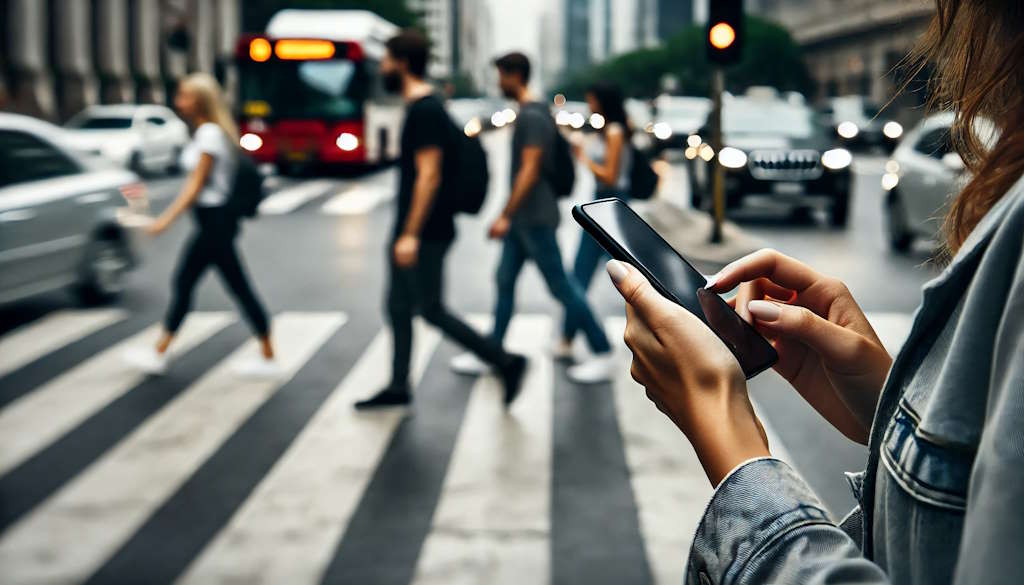
Pedestrian safety in urban areas: the dangers of distracted walking due to mobile phones increases the risk of accidents and interactions with vehicles, suggesting the need for new measures in infrastructure and planning

Pedestrians who use cell phones often unknowingly risk safety while crossing busy streets, which increases the likelihood of collisions with vehicles. This analysis proposes measures that could significantly reduce hazards at intersections.

Pedestrian safety in urban areas: the dangers of distracted walking due to mobile phones increases the risk of accidents and interactions with vehicles, suggesting the need for new measures in infrastructure and planning
Photo by: Domagoj Skledar/ arhiva (vlastita)

Pedestrian safety is greatly influenced by distractions caused by the use of mobile devices while walking, according to the latest research conducted at the University of British Columbia (UBC). The use of mobile phones, such as texting, talking, or listening to music, significantly increases the risk of traffic accidents as pedestrians often fail to notice their surroundings, resulting in a poorer adjustment of speed and direction of movement. This behavior makes pedestrians more susceptible to serious accidents, increasing the likelihood of collisions with vehicles by as much as 45%.


Previous studies have speculated that distracted pedestrians are at a greater risk, but the latest data provides concrete evidence that distraction significantly diminishes the navigational ability of pedestrians. It has been observed that pedestrians who are preoccupied with their mobile devices rarely adjust their speed or trajectory in relation to traffic conditions, placing them in more dangerous traffic situations.


The impact of distraction on drivers


The research also highlights how drivers recognize the risk posed by distracted pedestrians. Drivers often slow down when approaching pedestrians using mobile phones, aware of their unpredictable movement patterns. In some cases, this caution from drivers can reduce the number of accidents, but it is not a long-term solution to the growing problem of distracted walking.


A computer vision system developed at UBC, along with artificial intelligence models, was used to analyze video data collected from the two busiest intersections in downtown Vancouver. The analysis showed clear differences between distracted and undistracted pedestrians, especially in the context of traffic conflicts when vehicles and pedestrians are on a collision course. These conflicts increase the risk of accidents, especially when a pedestrian is distracted by using a mobile phone.


Opportunities for improving infrastructure


The results of the research open the door to new solutions that could significantly enhance pedestrian safety. One possibility is to adjust traffic lights to allow for longer green light durations for distracted pedestrians, while the introduction of auditory signals could help alert pedestrians to danger when crossing the street. It is also possible to use sensors that detect when a pedestrian is distracted and activate additional safety measures, such as raised crosswalks that increase the visibility of pedestrians to drivers.


Cities could consider installing warning signs aimed at pedestrians using mobile phones, as well as developing applications that automatically notify users when they enter high-risk zones, thereby reducing mobile phone use while crossing streets. Along with these changes, the research results also suggest identifying the most risky areas where pedestrian distraction is most pronounced, in order to further enhance safety in those zones.


Enhancing safety through smarter design


This data provides key guidelines for planning safer infrastructure in the future, especially in urban areas where pedestrian and vehicle interactions are a daily occurrence. Infrastructure improvements, such as raised crosswalks and pedestrian crossings equipped with sensors, can help reduce the number of accidents. By implementing these changes, cities can be better equipped to reduce the risks associated with distracted walking, ultimately decreasing the number of traffic accidents over the long term.


Furthermore, the proposed solutions could significantly contribute to the development of traffic models and simulations, allowing for a more thorough analysis of risks aimed at improving the safety of all road users, particularly pedestrians. Through a combination of technology and appropriate infrastructure, it is possible to ensure greater safety on the roads and reduce the dangers that pedestrians face on a daily basis.

Source: University of British Columbia

Find accommodation nearby

Creation time: 13 October, 2024

Science & tech desk

Our Science and Technology Editorial Desk was born from a long-standing passion for exploring, interpreting, and bringing complex topics closer to everyday readers. It is written by employees and volunteers who have followed the development of science and technological innovation for decades, from laboratory discoveries to solutions that change daily life. Although we write in the plural, every article is authored by a real person with extensive editorial and journalistic experience, and deep respect for facts and verifiable information.

Our editorial team bases its work on the belief that science is strongest when it is accessible to everyone. That is why we strive for clarity, precision, and readability, without oversimplifying in a way that would compromise the quality of the content. We often spend hours studying research papers, technical documents, and expert sources in order to present each topic in a way that will interest rather than burden the reader. In every article, we aim to connect scientific insights with real life, showing how ideas from research centres, universities, and technology labs shape the world around us.

Our long experience in journalism allows us to recognize what is truly important for the reader, whether it is progress in artificial intelligence, medical breakthroughs, energy solutions, space missions, or devices that enter our everyday lives before we even imagine their possibilities. Our view of technology is not purely technical; we are also interested in the human stories behind major advances – researchers who spend years completing projects, engineers who turn ideas into functional systems, and visionaries who push the boundaries of what is possible.

A strong sense of responsibility guides our work as well. We want readers to trust the information we provide, so we verify sources, compare data, and avoid rushing to publish when something is not fully clear. Trust is built more slowly than news is written, but we believe that only such journalism has lasting value.

To us, technology is more than devices, and science is more than theory. These are fields that drive progress, shape society, and create new opportunities for everyone who wants to understand how the world works today and where it is heading tomorrow. That is why we approach every topic with seriousness but also with curiosity, because curiosity opens the door to the best stories.

Our mission is to bring readers closer to a world that is changing faster than ever before, with the conviction that quality journalism can be a bridge between experts, innovators, and all those who want to understand what happens behind the headlines. In this we see our true task: to transform the complex into the understandable, the distant into the familiar, and the unknown into the inspiring.

NOTE FOR OUR READERS
Karlobag.eu provides news, analyses and information on global events and topics of interest to readers worldwide. All published information is for informational purposes only.
We emphasize that we are not experts in scientific, medical, financial or legal fields. Therefore, before making any decisions based on the information from our portal, we recommend that you consult with qualified experts.
Karlobag.eu may contain links to external third-party sites, including affiliate links and sponsored content. If you purchase a product or service through these links, we may earn a commission. We have no control over the content or policies of these sites and assume no responsibility for their accuracy, availability or any transactions conducted through them.
If we publish information about events or ticket sales, please note that we do not sell tickets either directly or via intermediaries. Our portal solely informs readers about events and purchasing opportunities through external sales platforms. We connect readers with partners offering ticket sales services, but do not guarantee their availability, prices or purchase conditions. All ticket information is obtained from third parties and may be subject to change without prior notice. We recommend that you thoroughly check the sales conditions with the selected partner before any purchase, as the Karlobag.eu portal does not assume responsibility for transactions or ticket sale conditions.
All information on our portal is subject to change without prior notice. By using this portal, you agree to read the content at your own risk.