Postavke privatnosti

New Trends in Tourism: Digital Currencies and Cashless Payments Are Changing Tourists' Travels

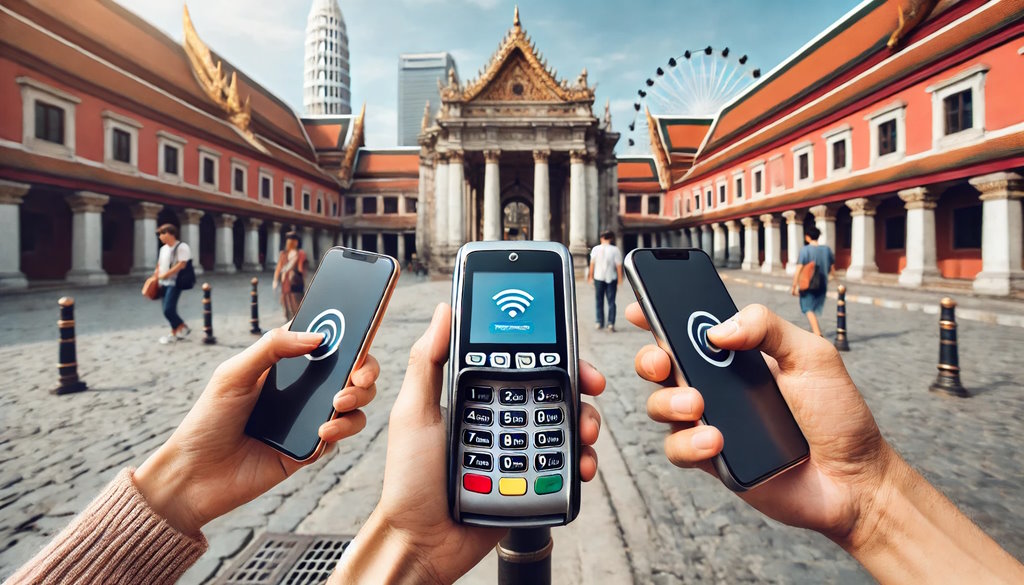
Tourists are increasingly switching to digital payments as a secure and convenient travel solution. Digital wallets, cryptocurrencies, and contactless options are changing the way travelers manage their finances abroad. This change brings benefits such as lower costs, faster transactions, and more secure data protection, which attracts an increasing number of tourists to destinations that support digital payments.

New Trends in Tourism: Digital Currencies and Cashless Payments Are Changing Tourists
Photo by: Domagoj Skledar/ arhiva (vlastita)

Digital currencies take over the global tourism market


In the world of tourism, traditional forms of payment are quickly giving way to modern digital currencies and cashless options, allowing tourists to make transactions more easily and securely. This new wave of digital possibilities, such as digital wallets and QR codes, has created a revolution that enables tourists around the world to pay for services in a way tailored to their needs and desires.


Advantages of digital payment options


One of the greatest advantages of digital payment options is the facilitation of transactions and the elimination of the need for physical cash. For instance, digital wallets offer the convenience of making payments without cash and cards, enabling users to easily and securely store payment information and access various services using only their smartphones. This form of payment also offers additional layers of security such as fingerprint authentication or facial recognition.


Tourists can also track their expenses in real time thanks to the features of digital applications that allow for expense tracking and budget management. Numerous digital payment applications provide users with functionalities such as monitoring spending, contributing to a sense of security and control over expenses while traveling.


Security and privacy of data in digital payments


Considering the increased concern over security and privacy, many tourists are increasingly using digital wallets due to their security features. Moreover, digital platforms employ advanced protection methods such as encryption and fraud protection, further encouraging user trust in the use of digital payments.


According to a recent survey, 63% of tourists in Mexico expressed concern about the security of their card information during online payments, while 34% indicated they would prefer to use digital wallets if they were available. This highlights how important it is for digital platforms to provide a high level of security for users to be willing to use them while traveling.


The convenience of digital payments for businesses in tourism


For tourism entities, adopting digital payments brings many advantages. Hotels and airlines use digital wallets to streamline the check-in and check-out process and reduce the time needed to process transactions, thereby improving the customer experience. Additionally, transaction costs are reduced, as digital platforms typically have lower fees than card systems.


In many cases, digital payments accelerate the purchasing process, reducing queues and waiting times, allowing tourists to devote more time to enjoying their holidays. Furthermore, with the development of contactless technology, transactions have become faster and simpler – it is enough to simply bring the device close to the POS terminal.


The economic impact of cashless tourism


The development of digital payment options has a broader impact on the economies of tourist destinations. In destinations where digital payments are available, there is an increase in the number of tourists, which raises revenue and creates new jobs. The transparency of digital transactions also reduces the possibility of fraud, and the simplicity of transactions attracts an increasing number of tourists.


This trend not only encourages the arrival of tourists but also reduces operating costs, especially those related to handling cash. Digital payment options enable faster and easier transactions, providing tourists with the flexibility to spend in local currency without the need to exchange cash, saving them time and money.


Cryptocurrencies as part of the future of tourism


In the world of digital payments, cryptocurrencies are becoming increasingly popular, offering unique advantages such as lower transaction costs and faster transfers. Cryptocurrencies and blockchain technology are becoming more prevalent in tourism, providing solutions for reducing costs and increasing security. Tourists can expect a wider application of cryptocurrencies as a means of payment, opening up new opportunities for travel without the constraints of conventional financial systems.

Find accommodation nearby

Creation time: 29 October, 2024

Tourism desk

Our Travel Desk was born out of a long-standing passion for travel, discovering new places, and serious journalism. Behind every article stand people who have been living tourism for decades – as travelers, tourism workers, guides, hosts, editors, and reporters. For more than thirty years, destinations, seasonal trends, infrastructure development, changes in travelers’ habits, and everything that turns a trip into an experience – and not just a ticket and an accommodation reservation – have been closely followed. These experiences are transformed into articles conceived as a companion to the reader: honest, informed, and always on the traveler’s side.

At the Travel Desk, we write from the perspective of someone who has truly walked the cobblestones of old towns, taken local buses, waited for the ferry in peak season, and searched for a hidden café in a small alley far from the postcards. Every destination is observed from multiple angles – how travelers experience it, what the locals say about it, what stories are hidden in museums and monuments, but also what the real quality of accommodation, beaches, transport links, and amenities is. Instead of generic descriptions, the focus is on concrete advice, real impressions, and details that are hard to find in official brochures.

Special attention is given to conversations with restaurateurs, private accommodation hosts, local guides, tourism workers, and people who make a living from travelers, as well as those who are only just trying to develop lesser-known destinations. Through such conversations, stories arise that do not show only the most famous attractions but also the rhythm of everyday life, habits, local cuisine, customs, and small rituals that make every place unique. The Travel Desk strives to record this layer of reality and convey it in articles that connect facts with emotion.

The content does not stop at classic travelogues. It also covers topics such as sustainable tourism, off-season travel, safety on the road, responsible behavior towards the local community and nature, as well as practical aspects like public transport, prices, recommended neighborhoods to stay in, and getting your bearings on the ground. Every article goes through a phase of research, fact-checking, and editing to ensure that the information is accurate, clear, and applicable in real situations – from a short weekend trip to a longer stay in a country or city.

The goal of the Travel Desk is that, after reading an article, the reader feels as if they have spoken to someone who has already been there, tried everything, and is now honestly sharing what is worth seeing, what to skip, and where those moments are hidden that turn a trip into a memory. That is why every new story is built slowly and carefully, with respect for the place it is about and for the people who will choose their next destination based on these words.

NOTE FOR OUR READERS
Karlobag.eu provides news, analyses and information on global events and topics of interest to readers worldwide. All published information is for informational purposes only.
We emphasize that we are not experts in scientific, medical, financial or legal fields. Therefore, before making any decisions based on the information from our portal, we recommend that you consult with qualified experts.
Karlobag.eu may contain links to external third-party sites, including affiliate links and sponsored content. If you purchase a product or service through these links, we may earn a commission. We have no control over the content or policies of these sites and assume no responsibility for their accuracy, availability or any transactions conducted through them.
If we publish information about events or ticket sales, please note that we do not sell tickets either directly or via intermediaries. Our portal solely informs readers about events and purchasing opportunities through external sales platforms. We connect readers with partners offering ticket sales services, but do not guarantee their availability, prices or purchase conditions. All ticket information is obtained from third parties and may be subject to change without prior notice. We recommend that you thoroughly check the sales conditions with the selected partner before any purchase, as the Karlobag.eu portal does not assume responsibility for transactions or ticket sale conditions.
All information on our portal is subject to change without prior notice. By using this portal, you agree to read the content at your own risk.