Postavke privatnosti

PEth blood test detects early risk of alcohol-induced liver disease

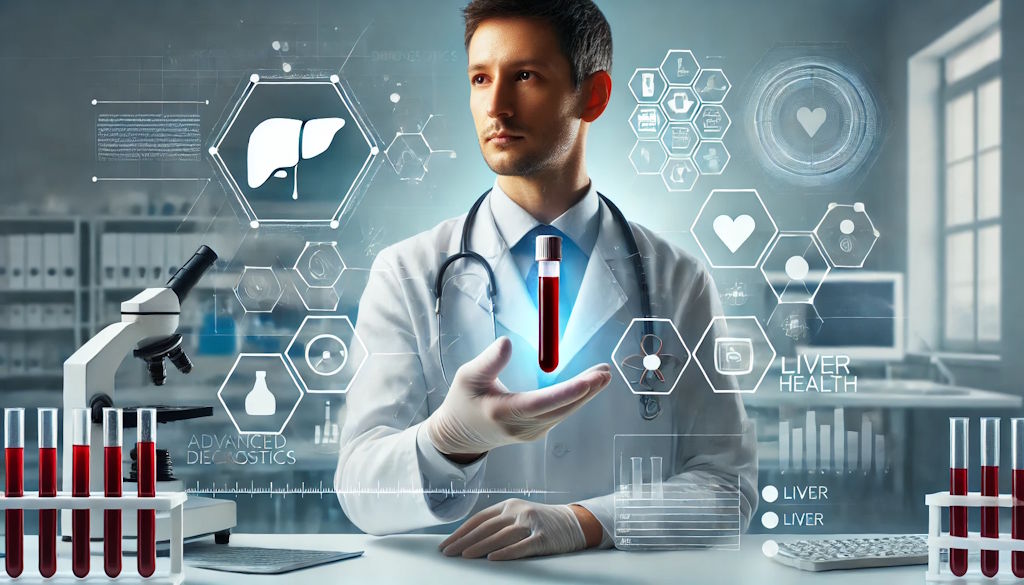
Phosphatidylethanol (PEth) is an innovative biomarker that accurately detects alcohol damage to the liver, enabling timely diagnosis and treatment of diseases such as fibrosis, cirrhosis and liver failure.

PEth blood test detects early risk of alcohol-induced liver disease
Photo by: Domagoj Skledar/ arhiva (vlastita)

Excessive alcohol consumption is one of the key contributors to serious health problems, especially when it comes to liver damage. Although doctors traditionally assess alcohol intake through self-reporting by patients, new research suggests that this approach is not reliable enough. A blood test that measures the biomarker phosphatidylethanol (PEth) could represent a breakthrough in the early detection of alcohol-related liver diseases.


Early detection is key to success


Liver fibrosis, a condition that occurs due to the accumulation of scar tissue in the liver, can be halted or even reversed if detected early. However, the traditional method of assessing alcohol consumption through discussions with patients has proven to be unreliable. Many patients either underestimate the amount of alcohol they consume or simply cannot remember how much they have drunk. This presents a significant challenge in medical practice, as an accurate assessment of alcohol intake can significantly impact the treatment outcome.


What is PEth and why is it important?


The biomarker phosphatidylethanol (PEth) is directly measured in the blood and allows doctors to more precisely determine the risk of liver fibrosis. According to research conducted at the University of California, San Francisco, PEth provides far more reliable data than self-reported information from patients. This research, the largest to date examining the link between PEth and liver disease risk, involved over 4,000 participants from different parts of the world, including the U.S., Russia, Uganda, and South Africa.


The results showed that PEth has a high correlation with the Fibrosis-4 (FIB-4) index, a risk measure for liver fibrosis based on a combination of the patient's age and results from several blood tests. On the other hand, self-reported alcohol consumption showed a significantly weaker correlation with the FIB-4 index, confirming the limitations of traditional assessment methods.


How can PEth improve medical practice?


The use of the PEth biomarker in routine medical practice could enable doctors to identify patients at higher risk of liver damage more quickly and accurately. This opens the door for timely interventions, such as counseling on reducing alcohol intake and changing dietary habits. For example, reducing sugar, fat, and salt intake could further contribute to halting or even reversing fibrosis.


A new era in diagnostics


PEth has the potential to become a standard part of routine blood tests, alongside tests for cholesterol and blood sugar levels. This would not only improve liver disease diagnosis but also allow better tracking of treatment outcomes. Experts believe that this approach will raise awareness about the severity of excessive alcohol consumption and encourage earlier treatment.


Dr. Pamela Murnane, the lead author of the study and an associate professor of epidemiology and biostatistics, emphasized the importance of precise measurement: "To effectively prevent and treat liver disease, we must have accurate data on alcohol consumption. Our current practice of self-reporting is clearly insufficient."


Health benefits and global impact


The introduction of PEth testing would not only improve treatment in developed countries but could also have a significant impact on public health in middle and low-income regions. With the global alcohol epidemic and the rise in liver-related diseases, this tool offers a universal solution that could save millions of lives.


As increasing numbers of studies confirm the value of PEth, the question remains when this biomarker will be integrated into standard medical protocols. It is clear that this innovative approach can make a significant difference in the fight against liver disease and related mortality.

Source: University of California

Find accommodation nearby

Creation time: 14 December, 2024

Science & tech desk

Our Science and Technology Editorial Desk was born from a long-standing passion for exploring, interpreting, and bringing complex topics closer to everyday readers. It is written by employees and volunteers who have followed the development of science and technological innovation for decades, from laboratory discoveries to solutions that change daily life. Although we write in the plural, every article is authored by a real person with extensive editorial and journalistic experience, and deep respect for facts and verifiable information.

Our editorial team bases its work on the belief that science is strongest when it is accessible to everyone. That is why we strive for clarity, precision, and readability, without oversimplifying in a way that would compromise the quality of the content. We often spend hours studying research papers, technical documents, and expert sources in order to present each topic in a way that will interest rather than burden the reader. In every article, we aim to connect scientific insights with real life, showing how ideas from research centres, universities, and technology labs shape the world around us.

Our long experience in journalism allows us to recognize what is truly important for the reader, whether it is progress in artificial intelligence, medical breakthroughs, energy solutions, space missions, or devices that enter our everyday lives before we even imagine their possibilities. Our view of technology is not purely technical; we are also interested in the human stories behind major advances – researchers who spend years completing projects, engineers who turn ideas into functional systems, and visionaries who push the boundaries of what is possible.

A strong sense of responsibility guides our work as well. We want readers to trust the information we provide, so we verify sources, compare data, and avoid rushing to publish when something is not fully clear. Trust is built more slowly than news is written, but we believe that only such journalism has lasting value.

To us, technology is more than devices, and science is more than theory. These are fields that drive progress, shape society, and create new opportunities for everyone who wants to understand how the world works today and where it is heading tomorrow. That is why we approach every topic with seriousness but also with curiosity, because curiosity opens the door to the best stories.

Our mission is to bring readers closer to a world that is changing faster than ever before, with the conviction that quality journalism can be a bridge between experts, innovators, and all those who want to understand what happens behind the headlines. In this we see our true task: to transform the complex into the understandable, the distant into the familiar, and the unknown into the inspiring.

NOTE FOR OUR READERS
Karlobag.eu provides news, analyses and information on global events and topics of interest to readers worldwide. All published information is for informational purposes only.
We emphasize that we are not experts in scientific, medical, financial or legal fields. Therefore, before making any decisions based on the information from our portal, we recommend that you consult with qualified experts.
Karlobag.eu may contain links to external third-party sites, including affiliate links and sponsored content. If you purchase a product or service through these links, we may earn a commission. We have no control over the content or policies of these sites and assume no responsibility for their accuracy, availability or any transactions conducted through them.
If we publish information about events or ticket sales, please note that we do not sell tickets either directly or via intermediaries. Our portal solely informs readers about events and purchasing opportunities through external sales platforms. We connect readers with partners offering ticket sales services, but do not guarantee their availability, prices or purchase conditions. All ticket information is obtained from third parties and may be subject to change without prior notice. We recommend that you thoroughly check the sales conditions with the selected partner before any purchase, as the Karlobag.eu portal does not assume responsibility for transactions or ticket sale conditions.
All information on our portal is subject to change without prior notice. By using this portal, you agree to read the content at your own risk.