Postavke privatnosti

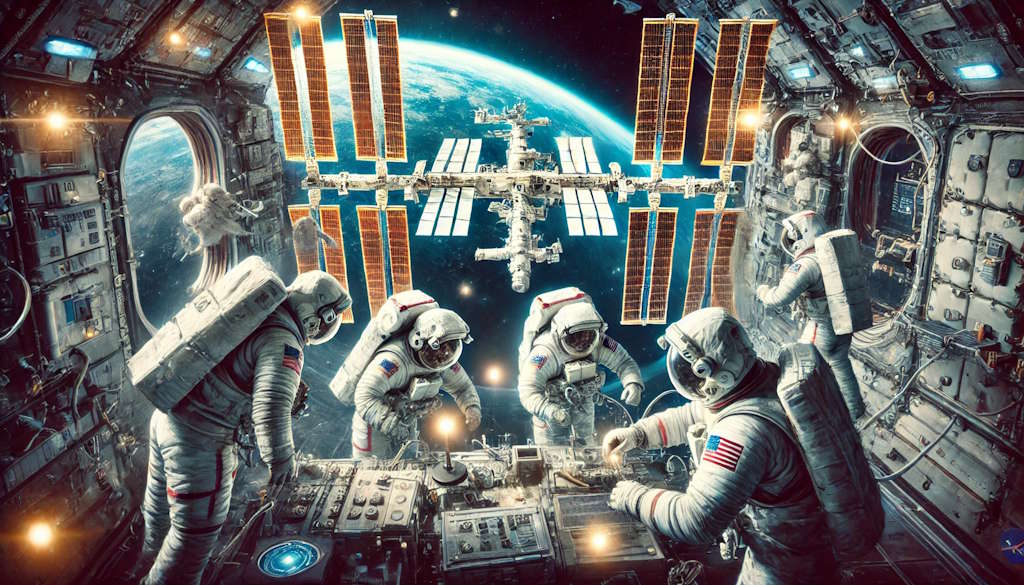
Marking 25 years of the International Space Station as a key element of space exploration

The International Space Station (ISS) celebrated 25 years of continuous operation, becoming a central location for scientific research. This celebration not only celebrates past achievements but also future plans in space exploration, providing insight into the importance of cooperation between countries.

Marking 25 years of the International Space Station as a key element of space exploration
Photo by: Domagoj Skledar/ arhiva (vlastita)

Commemoration of 25 Years of the International Space Station


The International Space Station (ISS) celebrates an exceptionally significant anniversary this November - 25 years of continuous operation. Over this quarter of a century, the ISS has established itself as a key element of human space exploration, a place where numerous experiments, research, and technological advancements have taken place. This year’s celebration was not just a historical event, but also an opportunity to reflect on past achievements and future plans for space exploration.


Development and Evolution of the Station


The station took its first step towards construction in 1998, when the Russian module Zarya and the American Unity module were launched separately but soon connected in space. Bob Cabana, commander of the STS-88 mission, recalls the early days of the station as a "spartan" place that still needed to create all the necessary conditions for long-term research and human habitation. Over the past years, the ISS has significantly expanded; modules from Russia, Japan, Europe, Canada, and the United States have been added, including robotic arms that have enabled complex tasks to be performed in microgravity conditions.


Experiments Pushing the Boundaries


One of the key aspects of the International Space Station is the experiments conducted in microgravity conditions. During its 25 years, the ISS has provided a unique opportunity to explore how microgravity affects various biological, chemical, and physical processes. For instance, scientists have addressed questions regarding the possibility of growing tissues in space, producing high-quality fibers for optical cables, and the biological effects of prolonged stays in space on the human body. Long-term missions provide scientific data that helps understand how organisms react to conditions without gravity, which is crucial for future missions to Mars or even more distant parts of the solar system.


Impact on the Human Body and Psychology


Life on the International Space Station comes with many challenges, not only physical but also psychological. Astronauts spend a lot of time in isolation, with minimal privacy, and are under constant pressure to meet demanding work tasks. Physical changes include muscle atrophy due to the lack of gravity, meaning astronauts must exercise for at least two hours every day to maintain muscle mass. Psychological effects are also profound; living in a small space, surrounded by the same people for months, poses a challenge that cannot be easily simulated on Earth. Experiments conducted on the ISS have provided valuable insights into how humans can adapt to life in space, which will be crucial for future long-duration missions.


Privatization and the Future of Space Stations


As the ISS enters its final phase, its service is expected to end by 2030, after which the station will be deorbited and safely brought down into the atmosphere, where most of the structure will burn up upon reentry. However, NASA and its partners are already working on developing new commercial space stations that could replace the ISS. In recent years, private companies such as Nanoracks, SpaceX, and Axiom Space have been actively involved in missions to the ISS, including cargo delivery and organizing commercial astronaut flights. NASA is also preparing for a gradual transition towards the commercialization of low Earth orbit, meaning that future stations could serve both scientific research and commercial ventures, including the production and development of technologies for future human missions.


Legacy and Symbolism of the International Space Station


The International Space Station is not only a technological marvel but also a symbol of international cooperation. Over the years, thousands of engineers, scientists, and astronauts from over 20 countries have worked to maintain and enhance the ISS, making it one of the most complex structures ever built by humans. The station demonstrates what can be achieved when countries work together to invest in research and development, setting aside political differences to achieve common goals. As the end of the ISS's operational life approaches, the legacy of this space station will continue to inspire future generations of researchers and engineers to keep exploring and expanding the boundaries of what is possible in space.

Find accommodation nearby

Creation time: 03 November, 2024

Science & tech desk

Our Science and Technology Editorial Desk was born from a long-standing passion for exploring, interpreting, and bringing complex topics closer to everyday readers. It is written by employees and volunteers who have followed the development of science and technological innovation for decades, from laboratory discoveries to solutions that change daily life. Although we write in the plural, every article is authored by a real person with extensive editorial and journalistic experience, and deep respect for facts and verifiable information.

Our editorial team bases its work on the belief that science is strongest when it is accessible to everyone. That is why we strive for clarity, precision, and readability, without oversimplifying in a way that would compromise the quality of the content. We often spend hours studying research papers, technical documents, and expert sources in order to present each topic in a way that will interest rather than burden the reader. In every article, we aim to connect scientific insights with real life, showing how ideas from research centres, universities, and technology labs shape the world around us.

Our long experience in journalism allows us to recognize what is truly important for the reader, whether it is progress in artificial intelligence, medical breakthroughs, energy solutions, space missions, or devices that enter our everyday lives before we even imagine their possibilities. Our view of technology is not purely technical; we are also interested in the human stories behind major advances – researchers who spend years completing projects, engineers who turn ideas into functional systems, and visionaries who push the boundaries of what is possible.

A strong sense of responsibility guides our work as well. We want readers to trust the information we provide, so we verify sources, compare data, and avoid rushing to publish when something is not fully clear. Trust is built more slowly than news is written, but we believe that only such journalism has lasting value.

To us, technology is more than devices, and science is more than theory. These are fields that drive progress, shape society, and create new opportunities for everyone who wants to understand how the world works today and where it is heading tomorrow. That is why we approach every topic with seriousness but also with curiosity, because curiosity opens the door to the best stories.

Our mission is to bring readers closer to a world that is changing faster than ever before, with the conviction that quality journalism can be a bridge between experts, innovators, and all those who want to understand what happens behind the headlines. In this we see our true task: to transform the complex into the understandable, the distant into the familiar, and the unknown into the inspiring.

NOTE FOR OUR READERS
Karlobag.eu provides news, analyses and information on global events and topics of interest to readers worldwide. All published information is for informational purposes only.
We emphasize that we are not experts in scientific, medical, financial or legal fields. Therefore, before making any decisions based on the information from our portal, we recommend that you consult with qualified experts.
Karlobag.eu may contain links to external third-party sites, including affiliate links and sponsored content. If you purchase a product or service through these links, we may earn a commission. We have no control over the content or policies of these sites and assume no responsibility for their accuracy, availability or any transactions conducted through them.
If we publish information about events or ticket sales, please note that we do not sell tickets either directly or via intermediaries. Our portal solely informs readers about events and purchasing opportunities through external sales platforms. We connect readers with partners offering ticket sales services, but do not guarantee their availability, prices or purchase conditions. All ticket information is obtained from third parties and may be subject to change without prior notice. We recommend that you thoroughly check the sales conditions with the selected partner before any purchase, as the Karlobag.eu portal does not assume responsibility for transactions or ticket sale conditions.
All information on our portal is subject to change without prior notice. By using this portal, you agree to read the content at your own risk.