Postavke privatnosti

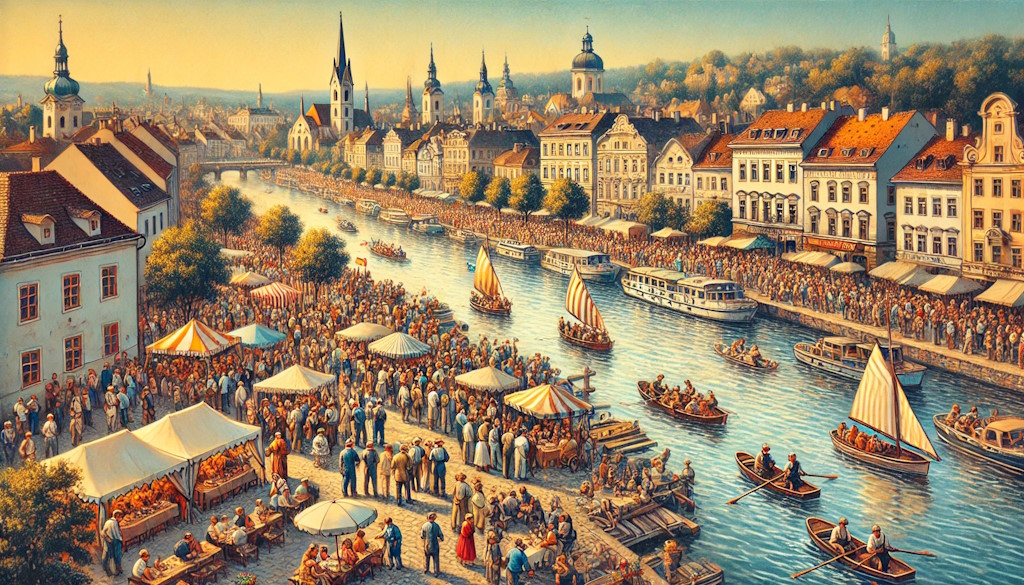
Celebrating the International Danube Day 2024 celebrates 30 years of the Danube Convention and 20 years of the Danube Day

On June 29, 2024, we mark the International Danube Day. Croatia was among the first countries to sign the Convention for the Protection of the Danube River in 1994, along with Austria, Bulgaria, Germany and other countries. This year we celebrate 30 years of the convention and 20 years of Danube Day.

Celebrating the International Danube Day 2024 celebrates 30 years of the Danube Convention and 20 years of the Danube Day
Photo by: Domagoj Skledar/ arhiva (vlastita)

Today, June 29, 2024, we celebrate International Danube Day.

Croatia was among the first countries in the Danube basin to express support for the idea of protecting the Danube by signing the Convention on Cooperation for the Protection and Sustainable Use of the Danube River in Sofia on June 29, 1994, together with 9 other countries - Austria, Bulgaria, Czech Republic, Germany, Hungary, Moldova, Romania, Slovakia, and Ukraine, and the European Union.

The Convention came into force in 1998, since when the International Commission for the Protection of the Danube River (ICPDR) based in Vienna has been successfully working towards achieving its goals. Today it counts 14 member countries (in addition to the previously mentioned, Slovenia, Bosnia and Herzegovina, Serbia, and Montenegro are also members) and the European Union as a whole.

Celebrating Danube Day
The Commission initiated the celebration of the day of this most significant and second-longest European river in 2004, on the occasion of the 10th anniversary of the signing of the Convention. Since then, Danube Day has been celebrated every year across the Danube basin, from Germany to Romania and Ukraine, on the Danube and its tributaries, with motivating messages and activities encouraging discussions about the Danube and raising awareness about the community's and every individual's responsibility for preserving this river.

The first Danube Day in Croatia was held on the banks of the Danube in Vukovar on June 29, 2004, and this year marks the 30th anniversary of the signing of the Convention and the 20th anniversary of the celebration of Danube Day, under the motto "Let the Danube remain blue!". Such celebrations remind the general public that waters know no borders, and everything that happens in the protection and use of rivers upstream is significant for all downstream members, making international cooperation in water management extremely important.

For this very reason, the Water Framework Directive, as the overarching directive of the European Union's water policy, requires cooperation on international basins and the creation of a joint management plan, which is one of the core tasks of this Commission.

The Danube basin has a great impact on the economy, environment, and culture of the entire area, and the Commission and member countries on this occasion express strong support for Ukraine due to the Russian aggression that negatively affects the measures taken and results achieved in the Black Sea basin so far, hoping that the next Danube Day will be celebrated in peace and security.

Find accommodation nearby

Creation time: 30 June, 2024

Tourism desk

Our Travel Desk was born out of a long-standing passion for travel, discovering new places, and serious journalism. Behind every article stand people who have been living tourism for decades – as travelers, tourism workers, guides, hosts, editors, and reporters. For more than thirty years, destinations, seasonal trends, infrastructure development, changes in travelers’ habits, and everything that turns a trip into an experience – and not just a ticket and an accommodation reservation – have been closely followed. These experiences are transformed into articles conceived as a companion to the reader: honest, informed, and always on the traveler’s side.

At the Travel Desk, we write from the perspective of someone who has truly walked the cobblestones of old towns, taken local buses, waited for the ferry in peak season, and searched for a hidden café in a small alley far from the postcards. Every destination is observed from multiple angles – how travelers experience it, what the locals say about it, what stories are hidden in museums and monuments, but also what the real quality of accommodation, beaches, transport links, and amenities is. Instead of generic descriptions, the focus is on concrete advice, real impressions, and details that are hard to find in official brochures.

Special attention is given to conversations with restaurateurs, private accommodation hosts, local guides, tourism workers, and people who make a living from travelers, as well as those who are only just trying to develop lesser-known destinations. Through such conversations, stories arise that do not show only the most famous attractions but also the rhythm of everyday life, habits, local cuisine, customs, and small rituals that make every place unique. The Travel Desk strives to record this layer of reality and convey it in articles that connect facts with emotion.

The content does not stop at classic travelogues. It also covers topics such as sustainable tourism, off-season travel, safety on the road, responsible behavior towards the local community and nature, as well as practical aspects like public transport, prices, recommended neighborhoods to stay in, and getting your bearings on the ground. Every article goes through a phase of research, fact-checking, and editing to ensure that the information is accurate, clear, and applicable in real situations – from a short weekend trip to a longer stay in a country or city.

The goal of the Travel Desk is that, after reading an article, the reader feels as if they have spoken to someone who has already been there, tried everything, and is now honestly sharing what is worth seeing, what to skip, and where those moments are hidden that turn a trip into a memory. That is why every new story is built slowly and carefully, with respect for the place it is about and for the people who will choose their next destination based on these words.

NOTE FOR OUR READERS
Karlobag.eu provides news, analyses and information on global events and topics of interest to readers worldwide. All published information is for informational purposes only.
We emphasize that we are not experts in scientific, medical, financial or legal fields. Therefore, before making any decisions based on the information from our portal, we recommend that you consult with qualified experts.
Karlobag.eu may contain links to external third-party sites, including affiliate links and sponsored content. If you purchase a product or service through these links, we may earn a commission. We have no control over the content or policies of these sites and assume no responsibility for their accuracy, availability or any transactions conducted through them.
If we publish information about events or ticket sales, please note that we do not sell tickets either directly or via intermediaries. Our portal solely informs readers about events and purchasing opportunities through external sales platforms. We connect readers with partners offering ticket sales services, but do not guarantee their availability, prices or purchase conditions. All ticket information is obtained from third parties and may be subject to change without prior notice. We recommend that you thoroughly check the sales conditions with the selected partner before any purchase, as the Karlobag.eu portal does not assume responsibility for transactions or ticket sale conditions.
All information on our portal is subject to change without prior notice. By using this portal, you agree to read the content at your own risk.