Postavke privatnosti

Innovative avocado tree fiber food packaging reduces plastic use and increases sustainability | karlobag.eu

New research shows how avocado tree pruning residues can be used to produce sustainable food packaging, reducing the use of bioplastics and improving the mechanical properties of packaging. This progress contributes to reducing the environmental footprint of the food industry.

Innovative avocado tree fiber food packaging reduces plastic use and increases sustainability | karlobag.eu
Photo by: Domagoj Skledar/ arhiva (vlastita)

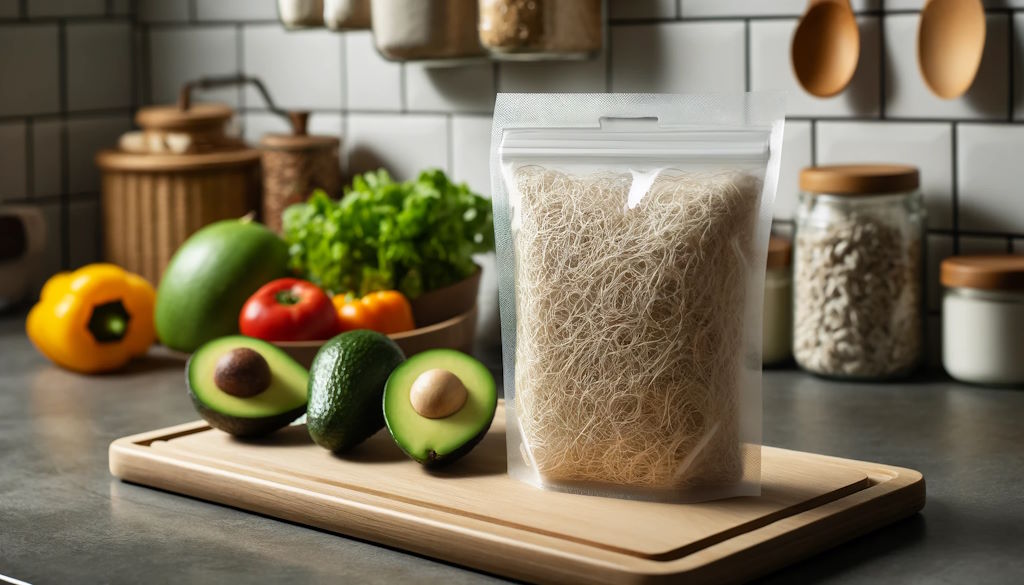
A new study has successfully produced a prototype of a more durable material that increases the biodegradability of food packaging by partially replacing bioplastics with cellulose fibers extracted from avocado tree branches and leaves.

Plastic allows for safe and hygienic food packaging, but its widespread use poses a significant environmental problem due to its limited recyclability and short lifespan. Therefore, the industry and the scientific community have been seeking more sustainable alternatives for decades. A recent study published by the University of Córdoba, in collaboration with the University of Girona, found a way to create a prototype of food packaging material that is more environmentally friendly, using waste that previously had no added value: avocado tree pruning residues. Spain is the main producer of avocados in Europe, with production concentrated in the Axarquia region of Malaga.

Through a semi-chemical and mechanical process in which leaves and branches are mixed with sodium hydroxide, refined, and defibrated, the study succeeded in isolating fibers from the woody residues and using them as reinforcing material, partially replacing the bioplastics used in food packaging. According to researcher Ramon Morcillo, the lead author of the paper and a researcher from the 'Bioproducts and Process Engineering' group at the University of Córdoba, the study managed to integrate cellulose obtained from avocado residues using a compatibilizing agent and at least partially reduce the use of bio-polyethylene, a type of bioplastic widely used in the packaging industry that, despite its plant origin, is not biodegradable.

Besides sustainability, this new composite has proven to be more durable, partly due to the strong mechanical properties of the natural fibers from avocado pruning residues. The study analyzed how the material performs at different fiber ratios, achieving up to a 49% increase in tensile strength.

The next step in the research line of the group, explained the author of the study, will be to evaluate other properties that are interesting to the industry; for example, the antimicrobial or antioxidant capabilities that the new composite may have, thereby opening the door to new forms of preservation that are more sustainable, specialized, and adapted to different types of products.

A few days ago, the European Parliament approved a series of measures to reduce and recycle packaging. Some types of single-use plastic packaging will be banned from 2030, which poses a real challenge for the industry: conducting market studies to assess the feasibility of those forms of sustainable packaging that have been proven feasible from a scientific standpoint. According to researcher Ramon Morcillo: "it is a detailed process that requires a lot of effort and information, but it is necessary for scaling and marketing these new materials." In the coming years, society will have to tackle this urgent challenge of reducing plastic use and promoting an economy less dependent on fossil fuels.

Source: Universidad de Córdoba

Find accommodation nearby

Creation time: 30 June, 2024

Environment & sustainability desk

The Environment and Sustainable Development Desk brings together authors and volunteers who have spent decades living close to nature, exploring ecological processes, and observing the changes that shape our planet. Behind every text stands the experience of people whose professional and personal paths have intertwined with topics such as environmental protection, renewable resources, climate challenges, and sustainable living. We write from the field, from conversations with researchers and activists, from our own notes and long-term observation, striving to ensure that each publication is both verified, understandable, and useful.

Our work is not based on superficial trends but on a real understanding of natural processes and the responsibility humans have toward the space in which they live. The stories we tell are created slowly, with much reflection, because we do not view ecology as a niche or a technical field but as a part of life that concerns all of us. Over the years, the editorial team has been following how the environment reacts to human habits, how communities introduce sustainable models, and how innovations merge with respect for natural cycles. We aim to bring all this closer to the reader in a form that is not dry but relatable and real.

We choose topics with particular care—topics that open space for understanding rather than fear. We write about climate change, but also about the people who find solutions. We speak about endangered natural areas, but also about those who restore them. We highlight the importance of sustainable development, but without grand words—preferring to share concrete experiences, small steps, and good practices we have witnessed during years of cooperation with ecological initiatives and experts.

Our goal is to build trust, not sensation. That is why we strive to ensure that every text is grounded in verified information and thoughtful journalistic work. We want to offer readers content that not only informs but also encourages understanding, responsibility, and care for the space we leave to future generations. The Environment and Sustainable Development Desk remains dedicated to this mission: to create content that reflects genuine passion for nature and contributes, even in a small way, to the greater picture—preserving what we all share.

NOTE FOR OUR READERS
Karlobag.eu provides news, analyses and information on global events and topics of interest to readers worldwide. All published information is for informational purposes only.
We emphasize that we are not experts in scientific, medical, financial or legal fields. Therefore, before making any decisions based on the information from our portal, we recommend that you consult with qualified experts.
Karlobag.eu may contain links to external third-party sites, including affiliate links and sponsored content. If you purchase a product or service through these links, we may earn a commission. We have no control over the content or policies of these sites and assume no responsibility for their accuracy, availability or any transactions conducted through them.
If we publish information about events or ticket sales, please note that we do not sell tickets either directly or via intermediaries. Our portal solely informs readers about events and purchasing opportunities through external sales platforms. We connect readers with partners offering ticket sales services, but do not guarantee their availability, prices or purchase conditions. All ticket information is obtained from third parties and may be subject to change without prior notice. We recommend that you thoroughly check the sales conditions with the selected partner before any purchase, as the Karlobag.eu portal does not assume responsibility for transactions or ticket sale conditions.
All information on our portal is subject to change without prior notice. By using this portal, you agree to read the content at your own risk.